Sandy bi-level ramblers create a natural chimney effect through the open split-entry stairwell. Dense cool air sinks to the basement while warmer, thinner air at 4,450 feet rises to the upper floor and has nowhere to exit unless return ducts pull it back. Without altitude-adjusted static pressure calibration, this produces a permanent temperature gap of 8 to 12 degrees between floors regardless of what the thermostat is set to.
Sandy homes built in the 1970s and 1980s frequently have ductwork sized using sea-level air density calculations. Because Wasatch Front air is roughly 12 percent less dense at 4,450 feet, the blower motor must move approximately 20 percent more air volume to deliver the same cooling effect as identical ductwork at sea level. Closed vents or undersized returns turn this volume requirement into a static pressure chokehold that seizes blower motors and burns out capacitors.
Canyon winds through Little Cottonwood Canyon coat Sandy condenser units in fine granite particulate that is both abrasive and thermally insulating. Uncleaned Wasatch dust buildup forces an AC system to run roughly 30 percent longer to achieve the same cooling output, which significantly increases the risk of a blown start capacitor, high head pressure compressor damage, and premature equipment failure during peak summer heat events.
Heat rises through convection, and the effect is aggressive in Sandy's split-entry architecture. Cold air is denser and settles in the lower level. Warm air accumulates on the upper floor and has nowhere to exit unless return air vents pull it back to the blower. If the upper floor returns are undersized, poorly placed, or absent entirely (a common reality in 1970s and 1980s Sandy construction), the hot air stays trapped. The blower fights gravity, altitude-thinned air, and inadequate return pathways all at once. The system loses.
Solar gain compounds the physics. Sandy sits in the rain shadow of the Oquirrh Mountains with high desert sun that hits west-facing and south-facing exposures with significant intensity through afternoon peak hours. Upper-floor bedrooms with west-facing windows near Dimple Dell or Quarry Bend routinely hit 90 degrees Fahrenheit by 4 p.m. even with the AC running continuously. The Utah Valley altitude-driven heat transfer problem means the condenser cannot reject heat as efficiently as it would at sea level, so indoor cooling output lags the outdoor temperature climb. Homes near Little Cottonwood Canyon see the worst of this pattern because the canyon airflow pulls daytime heat toward the home before evening cooldown arrives.
Restoring cooling balance starts with an external static pressure measurement across the entire duct system. In many Sandy homes, original ductwork was sized using sea-level load calculations that underestimate the CFM required at 4,450 feet. When the system cannot breathe, refrigerant inside the evaporator coil stays too cold, humidity in the air flash-freezes on the fins, and ice formation further restricts airflow. The AC begins blowing warm air through the registers even though the compressor is still running, and homeowners often misdiagnose this as refrigerant loss when the actual cause is airflow starvation. The failure cascade ends with a compressor running under high head pressure against a blocked coil, drawing excess amperage through the contactor relay, and eventually seizing. Short cycling, meaning the compressor turning on and off every few minutes rather than running through complete cooling cycles, is the diagnostic warning sign that precedes this failure pattern by weeks to months.

The blower motor is the air-circulation component that works hardest in Sandy's climate. Dry high desert air dries motor bearing lubrication faster than coastal humidity does. Sandy motors commonly show loud squealing noises or grinding at the 7 to 10 year mark when motors in milder climates run silently past 15 years. When bearings dry and friction increases, the motor pulls higher amperage, which stresses the start and run capacitors that support motor operation. Fan blade imbalance from warped or debris-struck blades compounds the stress because the motor has to overcome vibration load on top of bearing drag.
Capacitor failure is the most common emergency repair call in Sandy zip codes 84092 and 84094. The symptom is a compressor that hums without starting, or a blower that will not spin despite the thermostat calling for cooling, or weak airflow that leaves the upstairs untouched. Capacitor replacement runs $150 to $400 on most Sandy residential systems, and the repair takes under an hour. The underlying issue matters more than the replacement itself. If the motor is still fighting restricted airflow or altitude-derated capacity, the replacement capacitor will fail again within 18 to 36 months. Altitude-aware AC repair in Sandy UT audits the electrical stress drivers at the same time the capacitor gets swapped, because the pattern repeats otherwise. A complete electrical audit also inspects contactor relays for pitting or burnout, tests the condensate pump if the system uses one, and verifies that the circuit board is communicating properly with the thermostat.
Living near the Wasatch foothills brings an environmental factor that most HVAC manufacturers did not design for. Canyon winds through Little Cottonwood Canyon carry fine granite particulates and mountain debris across Sandy neighborhoods, depositing abrasive dust into every outdoor condenser unit. A condenser coil caked with Wasatch dust cannot reject heat to the outdoor air. Internal refrigerant pressures climb, the compressor runs hotter and longer, and the indoor evaporator coil cannot absorb heat from the upstairs air effectively.
Proper coil cleaning is not a garden-hose job. Wasatch granite dust packs into aluminum fins at depths a standard rinse cannot reach. Specialized non-acid coil cleaner, low-pressure water rinse, and proper rinse direction (from inside out on most condenser designs) restore the heat transfer surface. Sandy homes within a mile of active construction or canyon corridors benefit from semi-annual cleaning rather than the annual schedule that works in less dusty markets. Without this service, the AC system runs roughly 30 percent longer to achieve the same cooling output, which compounds every altitude-driven stress factor described in this article.
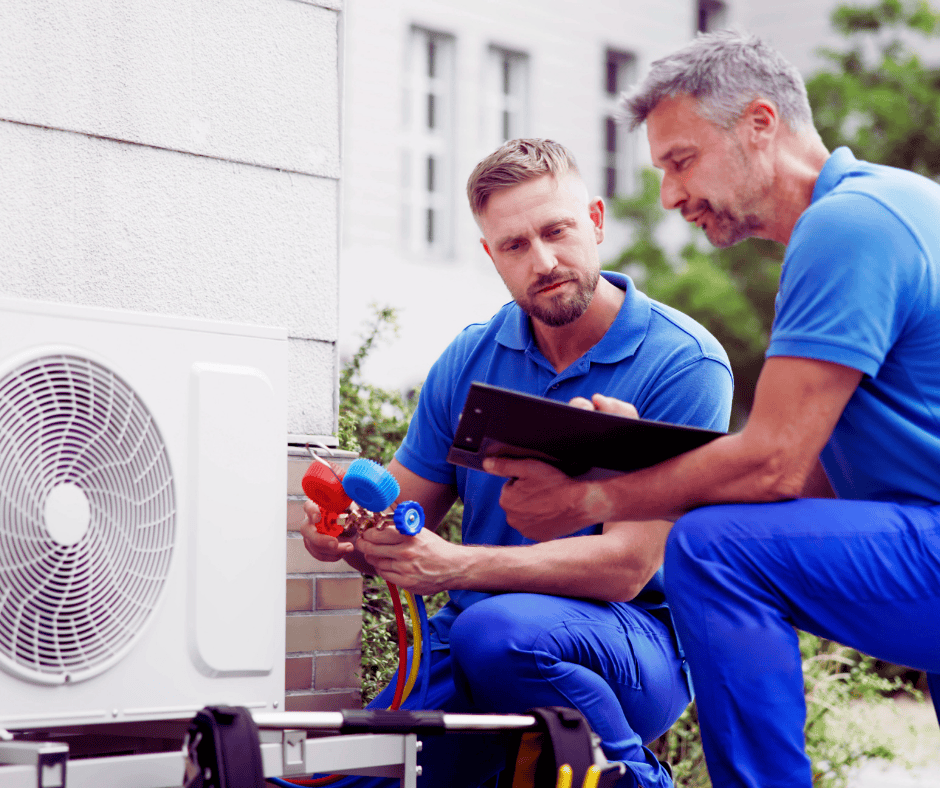
Refrigerant levels are critical, but Sandy's altitude changes the pressure-temperature relationships that technicians read during diagnostics. A refrigerant pressure check paired with superheat and subcool measurement has to be read against altitude-adjusted pressure-temperature charts rather than the default sea-level charts that come with most manufacturer documentation. Systems charged to "correct" readings using sea-level charts are actually overcharged or undercharged for Sandy's actual operating conditions. Overcharged systems run high head pressure that stresses the compressor discharge side. Undercharged systems starve the evaporator coil and cause ice formation that blocks airflow to the upstairs.
Refrigerant leak detection uses electronic leak sniffers and nitrogen pressure testing to locate leak sources at evaporator coils, copper line sets, brazed joints, or service valve ports. Once the leak is sealed, the system must be recharged to the manufacturer specification with altitude offset applied. Sandy-trained technicians carry altitude-adjusted pressure-temperature charts on the truck and reference them during every refrigerant service call. This precision is the difference between a repair that lasts ten years and one that fails back into service call rotation within two seasons.
The thermal expansion valve, commonly referenced as the TXV, is the component that meters refrigerant flow into the evaporator coil. On Sandy systems operating at 4,450 feet, the TXV has to respond to pressure conditions that differ from the factory-calibrated sea-level specification. A properly calibrated TXV maintains superheat within 8 to 15 degrees Fahrenheit across a range of load conditions. A TXV that is stuck, overcharged, or undercharged against the altitude-adjusted pressure sends incorrect refrigerant volumes into the evaporator, which produces the exact frozen coil and short cycling patterns Sandy homeowners describe. TXV replacement or adjustment is part of the altitude-adjusted diagnostic workflow on Sandy service calls that reach this failure mode.


The most common Sandy homeowner mistake when dealing with a hot upper floor is closing or blocking basement vents to force more cooled air upstairs. The logic seems sound. If less air goes to the already-cool basement, more will reach the hot bedrooms above. The physics of duct systems disagree sharply with the logic.
Closing supply vents in any duct system increases static pressure across the entire supply-side air pathway. In a Sandy bi-level at 4,450-foot altitude where the blower is already working against thin air, the additional static pressure pushes the blower motor past its design operating range. The motor pulls higher amperage. The capacitor takes more stress. The evaporator coil receives less airflow than it needs to transfer heat properly, which causes it to freeze. The condensate drain pan floods when the ice eventually melts. Worst case, the blower motor overheats and seizes, and the AC repair cost jumps from a $250 capacitor swap to a $1,200 blower replacement on an older system or a full replacement scenario on a system approaching end of life.
The correct response to upper-floor heat trapping is not vent closure. It is a full diagnostic of static pressure, return air adequacy, blower motor performance, and refrigerant charge accuracy, followed by calibrated airflow rebalancing that accounts for Sandy's altitude and the specific duct layout of the home. Sometimes the solution is damper installation. Sometimes it is return duct expansion on the upper floor. Sometimes it is blower motor replacement with an ECM variable-speed unit that can modulate CFM dynamically. The right answer depends on what the diagnostic finds, not on what the homeowner tried first.
When a Sandy bi-level's ductwork is structurally sound but the layout still produces uneven cooling, modern HVAC troubleshooting moves toward zoning and ECM variable-speed blower calibration. A zoned system uses motorized dampers at duct branches combined with multiple thermostats to direct cooling to the spaces that need it at any given moment. During a 95-degree July afternoon, the upper-floor zone calls for more airflow while the basement zone runs at reduced cooling output. During nighttime cooldown, the priority flips.
Variable-speed blower motors with electronically commutated motor (ECM) technology can modulate CFM from roughly 30 percent to 100 percent of rated output, which allows the system to ramp up airflow when the upper floor is hot and ramp down during mild conditions. The efficiency benefit is real. ECM blowers draw roughly 60 to 75 percent less electricity than legacy PSC motors at partial-load conditions, which matches the operating profile of a typical Sandy cooling season where the system rarely runs at 100 percent capacity for extended periods. Zoning control boards integrate with modern thermostats including Nest Learning Thermostat, ecobee Premium, and Honeywell Home, allowing remote control and scheduling that match Sandy resident work-from-home patterns that surged after 2020 and have stayed above pre-pandemic levels through 2026.
Ductless mini-split installation is the alternative for Sandy bi-levels where the duct system genuinely cannot be rebalanced. A single-zone Mitsubishi Electric M-Series or Daikin Emura wall-mount cassette serving the hottest upstairs bedroom often solves the comfort problem without requiring full HVAC replacement. The operating cost is lower than the original system because the mini-split cools only the space that needs cooling. For large estates in Quarry Bend or homes with vaulted ceilings in Sandy City Center, a multi-zone Mitsubishi or Daikin system with three to five indoor units replaces the need for whole-home duct balancing entirely.
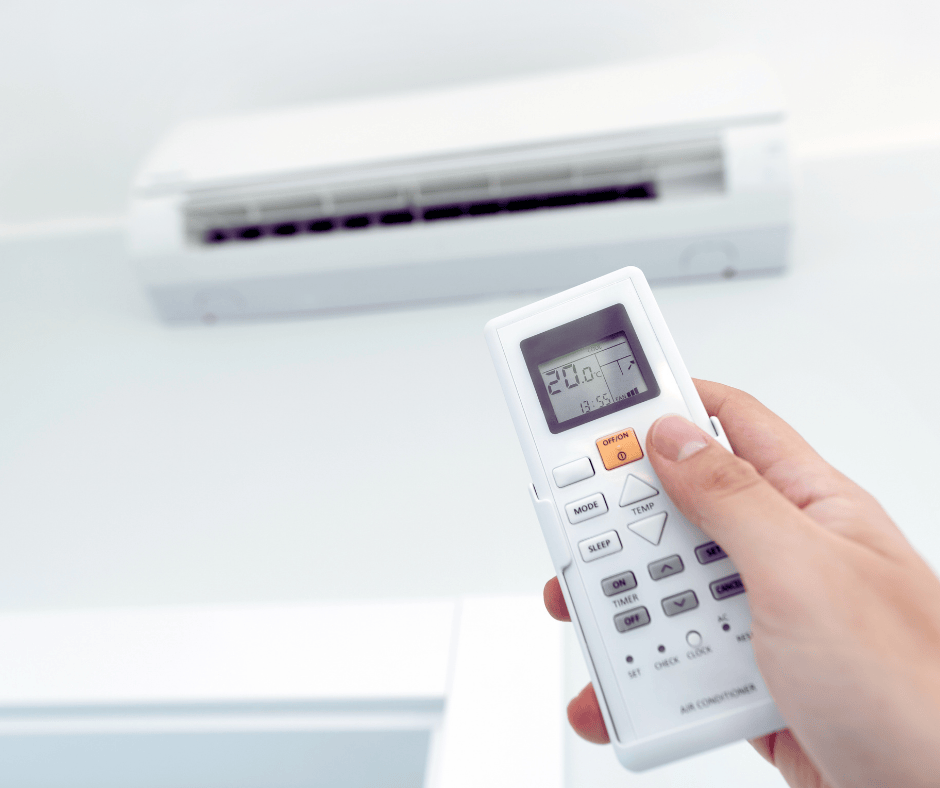
Modern Sandy ramblers often carry Nest Learning Thermostat, ecobee Premium, Honeywell Home, or Lennox iComfort systems that communicate with the air handler and condenser through low-voltage wiring and, increasingly, through wireless protocols. Communication errors between the thermostat and the control board produce symptoms that look like mechanical failure but are actually signal problems. A system that short-cycles, runs at unexpected times, or fails to respond to thermostat inputs may have a wiring issue at the C-wire (common wire) connection, a firmware mismatch between the thermostat and the control board, or a failed thermostat sensor that reads room temperature incorrectly.
Proper diagnostic on thermostat communication errors tests the voltage at each wire terminal, verifies the control board responds to manual input at the air handler, and confirms the thermostat is communicating with the system across the full operating range. In Sandy's high-altitude dry climate, static electricity buildup during winter months occasionally damages thermostat electronics, which then produces cooling problems the following summer that trace back to a failure the homeowner did not notice at the time.
A proper diagnostic on a Sandy bi-level rambler with airflow problems covers five measurement points. Static pressure readings at the supply plenum and return plenum quantify whether the duct system operates within the manufacturer-specified range, with Sandy altitude adjustment applied. Temperature differential across the evaporator coil confirms whether the cooling cycle is actually moving heat, with a healthy Sandy system typically running 16 to 22 degrees Fahrenheit delta-T at the coil. Blower motor amperage draw compared to nameplate rating identifies bearing wear or winding degradation before catastrophic failure. Refrigerant subcool and superheat measurements verify charge accuracy against altitude-adjusted pressure-temperature charts. Duct leakage estimation identifies whether supply or return air is escaping into unconditioned attic or crawlspace before reaching living spaces.
Any competent Sandy diagnostic closes with a clear summary of what was found, what it will cost to repair, and what the repair-versus-replacement math looks like on the specific system. A 13-year-old AC with a failed capacitor and a dirty coil gets a repair recommendation. A 13-year-old AC with a failed capacitor, a leaking evaporator coil, a deteriorating compressor drawing high amperage, and an inadequate duct system gets an honest conversation about whether the next $3,500 in repairs delivers value or whether a properly sized and commissioned replacement makes more economic sense. Sandy homeowners deserve the full picture, not a patch-and-pray repair that fails within the next cooling season.

Utah state energy code requires SEER2 14.3 minimum for new split system AC installations, which applies to full replacement work. Repair work on existing equipment does not trigger code upgrade requirements. Homeowners weighing the repair-or-replace decision on a 10-plus year old system should factor the rebate and tax credit stack into the calculation. Rocky Mountain Power Wattsmart rebates on qualifying high-efficiency AC and heat pump installations recover roughly $300 to $800 of installed cost, with program parameters updated effective February 27, 2026 that favor heat pump conversion and weatherization measures. Dominion Energy ThermWise rebates apply on qualifying high-efficiency natural gas furnace installations that frequently pair with AC replacement projects. Federal Inflation Reduction Act 25C tax credits add up to $600 for qualifying central AC replacements or up to $2,000 for qualifying heat pump conversions, with a maximum aggregate annual credit of $3,200 across all energy-efficient home upgrades.
For a Sandy bi-level homeowner facing the decision between a $2,800 repair on a 12-year-old system or a $9,500 full replacement with a correctly sized variable-speed ECM system, the stacked incentive package can offset $1,500 to $2,800 of the replacement cost, which often makes the replacement economics more favorable than the surface numbers suggest. Western Heating, Air and Plumbing documents rebate and tax credit eligibility on every installation quote so homeowners can run the full math with accurate numbers.
Western Heating, Air and Plumbing operates from 9192 S 300 W, Sandy, UT 84070 and serves the full Salt Lake County market from Sandy through South Jordan, Draper, Midvale, West Jordan, Cottonwood Heights, Holladay, and the surrounding Wasatch Front communities. Service extends throughout Sandy zip codes 84047, 84070, 84090, 84092, 84093, and 84094, covering Historic Sandy, Crescent, Hidden Valley, Alta View, Dimple Dell, Quarry Bend, Sandy City Center, the 9000 South corridor, and the I-15 corridor communities. 24/7 emergency AC repair dispatch available during active failures with same-day service through peak summer demand. Utah Licensed HVAC Contractor. Utah Licensed Plumbing Contractor. BBB Accredited. NATE-Certified Technicians trained on Wasatch Front altitude-adjusted diagnostics. RMGA (Rocky Mountain Gas Association) Certified for high-altitude combustion and gas appliance work. EPA Section 608 Refrigerant Certified across the technician team. Factory authorized installation and repair on Carrier, Trane, Lennox, Rheem, Goodman, American Standard, York, Bryant, Mitsubishi Electric, Daikin, and LG equipment, including central air restoration, heat pump repair, and full HVAC troubleshooting. Every repair includes a 1-year parts and labor warranty, upfront flat-rate pricing, altitude-adjusted refrigerant charge verification, and clear documentation of repair-versus-replacement economics before any work begins. Sandy and Salt Lake County homeowners scheduling preventive AC maintenance ahead of peak summer demand can request the same upfront flat-rate pricing and altitude-adjusted diagnostic discipline through annual or seasonal AC maintenance plans designed to catch refrigerant charge drift, capacitor degradation, and condenser coil fouling before they trigger an emergency failure. Call (385) 233-9556 for 24/7 emergency AC repair and same-day service across Sandy, Salt Lake County, and the Wasatch Front.

Redirect to:
|
This page is a redirect. The following categories are used to track and monitor this redirect:
|
This is usually caused by thermal stratification combined with inadequate return air flow. In many Sandy bi-level ramblers built through the 1970s and 1980s, the upper floor does not have enough return vents to pull the accumulated hot air back to the blower for cooling. The AC delivers cold supply air to the upper floor, but the hot air has nowhere to exit, so the room temperature never drops meaningfully. Solutions include adding return air ducts to the upper floor, upgrading to a high-static ECM variable-speed blower that can overcome the pressure imbalance, or installing a ductless mini-split to serve the hottest upstairs space directly. A proper diagnostic measures static pressure and return adequacy before recommending a specific fix.
In roughly 90 percent of Sandy bi-level cases, the AC tonnage is correct for the home's square footage, but the duct velocity and static pressure are wrong for the altitude. Air at 4,450 feet is roughly 12 percent less dense than at sea level, which means the ducts need to move more CFM to deliver the same cooling result. If the original installation never applied altitude adjustment to Manual D duct design, the system feels undersized even though the equipment matches the Manual J load calculation. The fix is usually not a larger AC. It is duct modification, return air adequacy correction, or ECM blower upgrade that restores the airflow the altitude demands. A proper Sandy diagnostic identifies which variable is actually causing the undersize feeling before recommending equipment replacement.
No, never fully close them. In Sandy's high-altitude environment, the AC system is already working against thin air at 4,450 feet, and the blower motor fights static pressure that sea-level ductwork specifications underestimate. Closing supply vents increases backpressure on the blower motor, which can freeze the evaporator coil, burn out the motor windings, or trigger a compressor lockout that turns a comfort issue into a $1,200 to $2,000 emergency repair. The correct approach is balancing, which means partially closing basement vents while keeping at least 75 percent of the duct system open and having a technician verify static pressure stays within the equipment manufacturer's specification after the adjustment.